
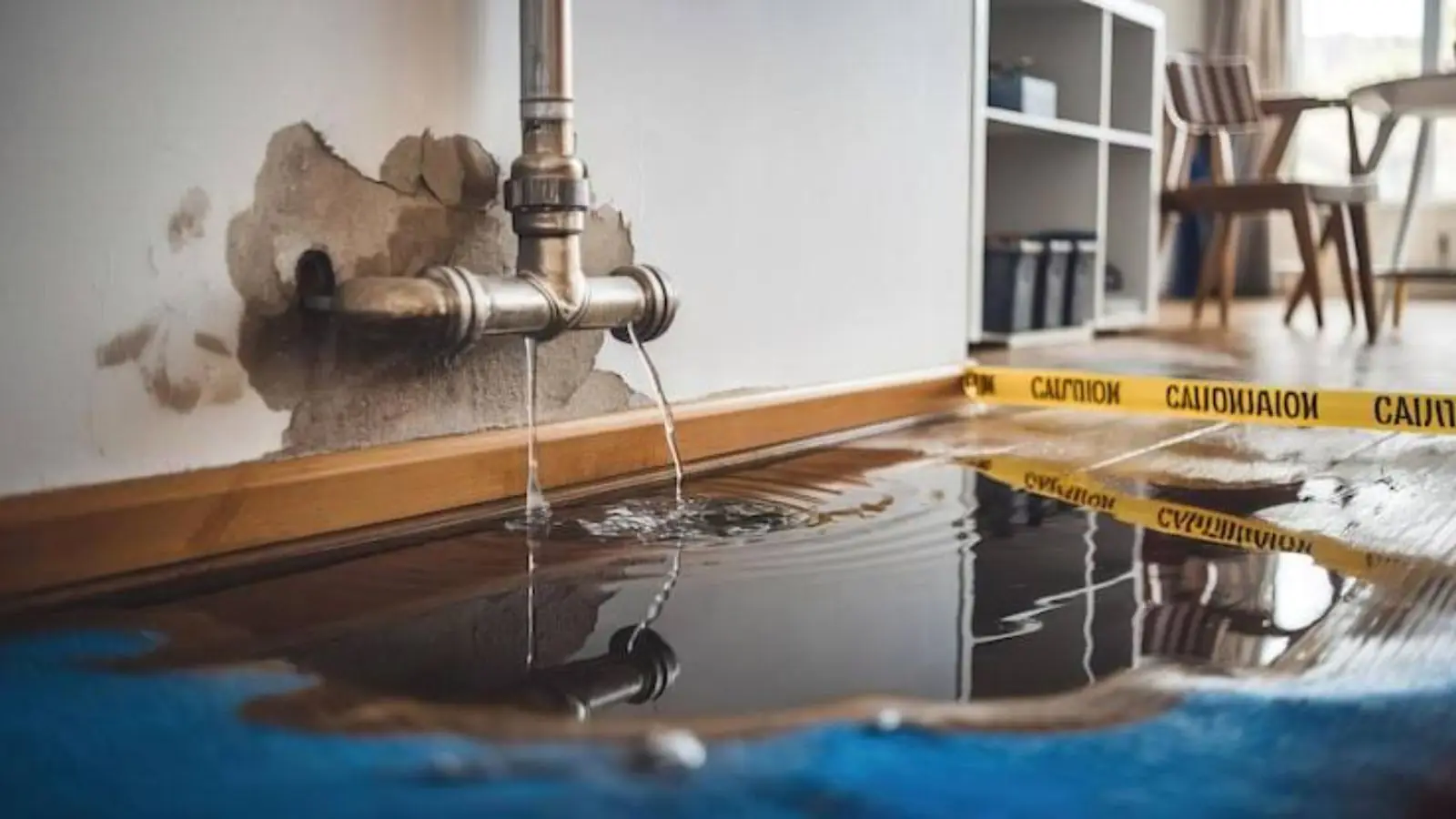
Safety first
If water has reached an electrical panel, outlet, appliance or the base of a ceiling light, stay out of the wet area. Cut power at the main breaker only if the panel can be reached dry. Call the utility or 911 for any electrical or gas risk before calling the restoration line. Sewage or a strong gas smell means leave the house.
Removal and drying after a burst pipe are judged against the published ANSI/IICRC S500 standard for water damage restoration. You can ask any company whether its crews work to it.
The first hour, in order
If water is still spreading
Stop the flow
Turn off the main shut-off valve, usually at the front of the house, the garage wall or by the water heater. If you cannot find it, the water meter box at the curb has a valve too.
Make the area safe
Keep everyone out of rooms where water touches electrical. Do not use a household vacuum on standing water.
Photograph first
Take photos and a slow video of the water, the damaged pipe and the wet rooms before moving furniture. These records support an insurance claim.
Lift what you safely can
Move rugs, books, laptops and small furniture to dry ground. Leave heavy furniture alone.
Relieve the pressure
Once the main is closed, open the lowest faucet in the house to relieve pressure, and call the restoration line.
Water will keep traveling after the pipe stops. It runs under baseboards, into wall cavities and down to the room below. Calling early matters more than cleaning, because standing water and saturated carpet are the parts crews can remove fastest.
Where the water came from changes the plan
Supply line under a sink
Cabinet floors soak first, then the drywall behind them. The flexible line may have failed at the nut, so shut off the angle stop beneath the sink.
Burst pipe in a wall or attic
Water comes out the ceiling below or runs inside the wall. Expect the ceiling to sag. If it bulges, poke a small drain hole with a bucket under it.
Water heater failure
A tank can release dozens of gallons. Turn off the cold supply to the heater and the gas valve or breaker, but only if you can reach them dry.
Upstairs fixture
Upstairs bath and laundry leaks show up as a stain downstairs. The wet floor above and the ceiling below both need checking.
Pipe stopped but the floor is still wet?
Call now so extraction starts before the water wicks into walls.
Why extraction beats towels
Towels and mops move a gallon or two. A truck-mounted or portable extraction unit pulls water from carpet, pad and hard floors in volume, and that matters because the less water left, the less the dehumidifiers must handle later. Carpet pad often cannot be saved, so crews lift the carpet, cut the pad out and extract the subfloor below it.
After the extraction, the work moves to drying. A moisture meter and thermal imaging camera show where water has gone, and air movers and LGR dehumidifiers dry the structure over the following days. That phase is covered in more depth under emergency water removal and water mitigation.
| Situation | Do now | Leave for the crew |
|---|---|---|
| Clean supply water, small area | Shut off water, mop up, run a fan | Checking walls and cabinet bases for hidden moisture |
| Water across carpet | Photograph, lift small items | Extraction and cutting out pad |
| Ceiling below is wet | Move furniture, place buckets | Opening the ceiling, drying the cavity |
| Water near panel or outlets | Stay out, call utility or 911 | Everything inside the wet zone |
| Water from a drain or toilet overflow | Keep out, no contact | Cleanup under contaminated-water protocol |
Where not to put the water
Pumping or hosing wet debris to the curb is not a shortcut. City ordinance prohibits dumping anything other than clean water into storm drains, so never route contaminated water to the street. If the water has touched sewage, chemicals or soil, ask the crew how it will be disposed of, and see water damage cleanup for the sanitation side.
Calling the right water provider
After the leak is stopped you may need your water company, either to shut off the supply at the meter or to ask about a high bill. In the Conejo Valley there are four water purveyors, so the number on your bill matters. Read the bill or use the city's map before calling the wrong office at midnight.
After the dry-out: scope and rebuild
Once the readings reach their goal, you will have a list of what was removed and what needs replacing. Ask for it in writing, with scope and price explained before work starts. Typical items include baseboard, drywall sections, cabinet toe kicks and flooring.
Homes up the valley near Moorpark and across town in Thousand Oaks face the same sequence. Call (805) 291-8940 for same-day response when available, and tell the dispatcher whether the water is clean, gray or sewage.
Newbury Park water and weather notes
The Conejo Valley is served by four water purveyors: the City of Thousand Oaks, California American Water, California Water Service and Camrosa Water District. The city publishes a Find Your Water Provider map at toaks.gov/waterproviders, and city water bills can be reached at (805) 449-2201. Because the provider varies by address, read your bill or use the map so you know which office can verify a meter reading or a leak adjustment.
The City of Thousand Oaks prohibits dumping anything other than clean water into storm drains. The practical meaning is simple. Water that has run across a dirty floor, a garage or a flooded yard does not go down the driveway to the gutter, and a crew should explain its disposal plan.
Replacing water heaters and plumbing fixtures, and repairing gas, water or sewer lines, are on the city's published permit list. The city's online portal is TO/24, and the Building contact is (805) 449-2320. Ask before a plumber starts, so your repair is inspected and documented.
Sources: City of Thousand Oaks website
Frequently asked questions
Should I call a plumber or a restoration company first?
Stop the water at the main shut-off, then call both. A plumber fixes the pipe, and the restoration crew removes water and dries the structure.
If you cannot stop the flow at all, call the water provider and then the restoration line.
Is the water from a burst supply line safe to touch?
Fresh water from a supply line is generally clean at first, but it picks up contaminants as it crosses floors and sits in carpet. Treat it carefully once it has been standing.
Anything from a drain, toilet or sewer line should be treated as contaminated.
Will my insurance cover a burst pipe?
Sudden and accidental water damage is often covered, and gradual leaks and neglect often are not. Check your policy or ask your insurer.
Photos, video, a written scope and receipts help whichever way it goes.
Can I keep the carpet?
Sometimes, if the water was clean and extraction began early. The pad underneath is usually removed either way.
A crew will check the backing and the subfloor with a moisture meter before deciding.
How do I know which water company to call in Newbury Park?
Four purveyors serve the Conejo Valley, so the answer depends on the address. Read your bill or use the city's Find Your Water Provider map at toaks.gov/waterproviders.
City water bills can be reached at (805) 449-2201, and other water questions at (805) 449-2100.