
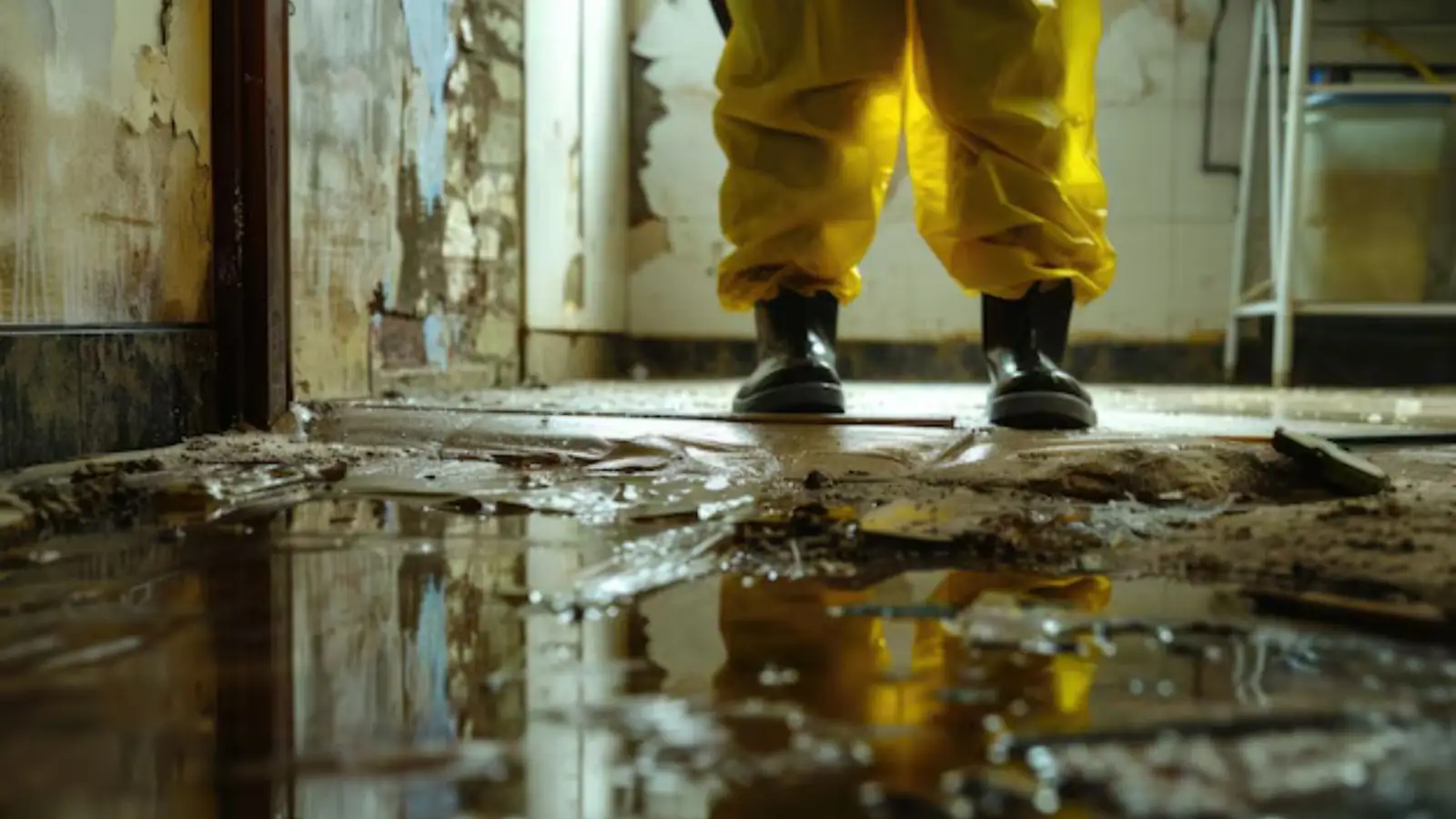
Water damage cleanup in Newbury Park, CA starts once the water is stopped. The job removes soaked carpet, pad, wet drywall and debris, then sanitizes and deodorizes what stays. The first 48 hours matter most, so if you are looking at wet materials now, call the 24/7 line, keep people and pets out of the wet area and keep power off in wet rooms only if the panel is dry to reach.
Safety steps before cleanup starts
Wear gloves and boots when handling wet material. Stay out of rooms where water reaches outlets or the panel. Do not mix household cleaners with sewage or floodwater, and bag soaked items instead of carrying them through clean areas.
Why the first 48 hours are an emergency
Wet porous materials start to break down quickly. Carpet pad holds water like a sponge, drywall wicks it upward, and odor begins to settle in. Getting soaked materials out in the first two days keeps the problem from growing and cuts down on what has to be replaced.
This page is about the cleanup step after the water source is shut off. If standing water is still on the floor, see emergency water removal first. If the walls are still wet, the drying side is covered under water mitigation.
What gets cleaned and what gets removed
| Material | Usually cleaned | Usually removed |
|---|---|---|
| Carpet and pad | Clean-water carpet if extracted quickly | Pad that soaked, and any carpet touched by Category 2 or 3 water |
| Drywall | Board that stayed firm and reads dry | Board that is soft, swollen or stained by contaminated water |
| Hard flooring | Tile and sealed surfaces | Laminate and unsealed wood that swelled |
| Insulation | Rarely | Wet batts, which lose their value when soaked |
| Cabinets and trim | Solid pieces that dry fully | Particleboard that swelled |
Soaked materials in your home?
Call the 24/7 line before the odor sets in.
How cleanup is done
Assess the water category
Clean, gray or black water under the ANSI/IICRC S500 standard decides what can be saved.
Remove ruined materials
Wet carpet, pad, drywall and insulation are cut out and bagged for disposal.
Sanitize
Antimicrobial treatment goes on framing and hard surfaces where the water category calls for it.
Deodorize and verify
Odor is treated at the source and air is cleaned. Moisture readings confirm the area is ready for drying or repair.
Sanitizing and deodorizing
Sanitizing is about the surfaces left behind after removal. Framing, subfloors and concrete are cleaned, and an antimicrobial product goes on where the water category calls for it. For clean supply-line water this step is light. For gray or black water it is thorough and often done twice.
Deodorizing works on the source of the smell. Odor molecules settle into porous materials, so those materials are removed first. Air scrubbers and thermal fogging or hydroxyl treatment may follow, depending on the room and the material. A smell that returns after drying usually means moisture is still present somewhere.
Two common mistakes make cleanup harder. One is drying a room with fans but leaving soaked pad underneath, which keeps the smell alive. The other is closing a wall over a damp cavity because the surface feels dry. Readings, not touch, decide when a space is ready.
Contents and belongings
Furniture and belongings that sat in water are sorted by what they are made of. Solid wood and hard goods can often be cleaned. Upholstery, mattresses and particleboard furniture are harder to save after contaminated water. Photograph everything before it moves, because those photos help with an insurance claim.
What affects the cost
Cleanup scope depends on the water category, the area affected, the materials involved, the days of drying that follow and how much rebuild is left. Scope and price are explained before work starts. In general terms, sudden and accidental water damage is often covered by a homeowner policy and gradual leaks often are not. Check your policy or ask your insurer. Want your real number? Call (805) 291-8940.
Local notes for Newbury Park
Do not pour contaminated cleanup water into the street or storm drains. The City of Thousand Oaks ordinance allows only clean water in storm drains, and most of Newbury Park sits inside the city. Debris disposal and permit rules vary by scope, so ask the city building division at (805) 449-2320 before major work.
Once cleanup is done, water damage repair rebuilds the room. If the water was sewage or floodwater, read about flood damage restoration as well. We also serve Moorpark and nearby towns.
Frequently asked questions
Do you handle water damage cleanup emergencies at night or on weekends in Newbury Park?
Yes. The 24/7 line is open every day, including nights, weekends and holidays. Same-day response is offered when available.
Can wet carpet be saved?
Sometimes. Carpet soaked by clean water and extracted quickly may be saved, but pad is usually replaced. Carpet touched by gray or black water is usually removed.
How do you get rid of the damp smell?
Odor comes from wet materials, so the source is removed first. Sanitizing, air cleaning and drying then control what is left.
What should I photograph before cleanup starts?
Photograph the water, the damaged materials, the affected rooms and any damaged belongings. Keep receipts for any emergency purchases.
Do I need to get a permit for cleanup?
Cleanup alone often does not, but permit rules vary by scope. Ask your city building department before repair work.