
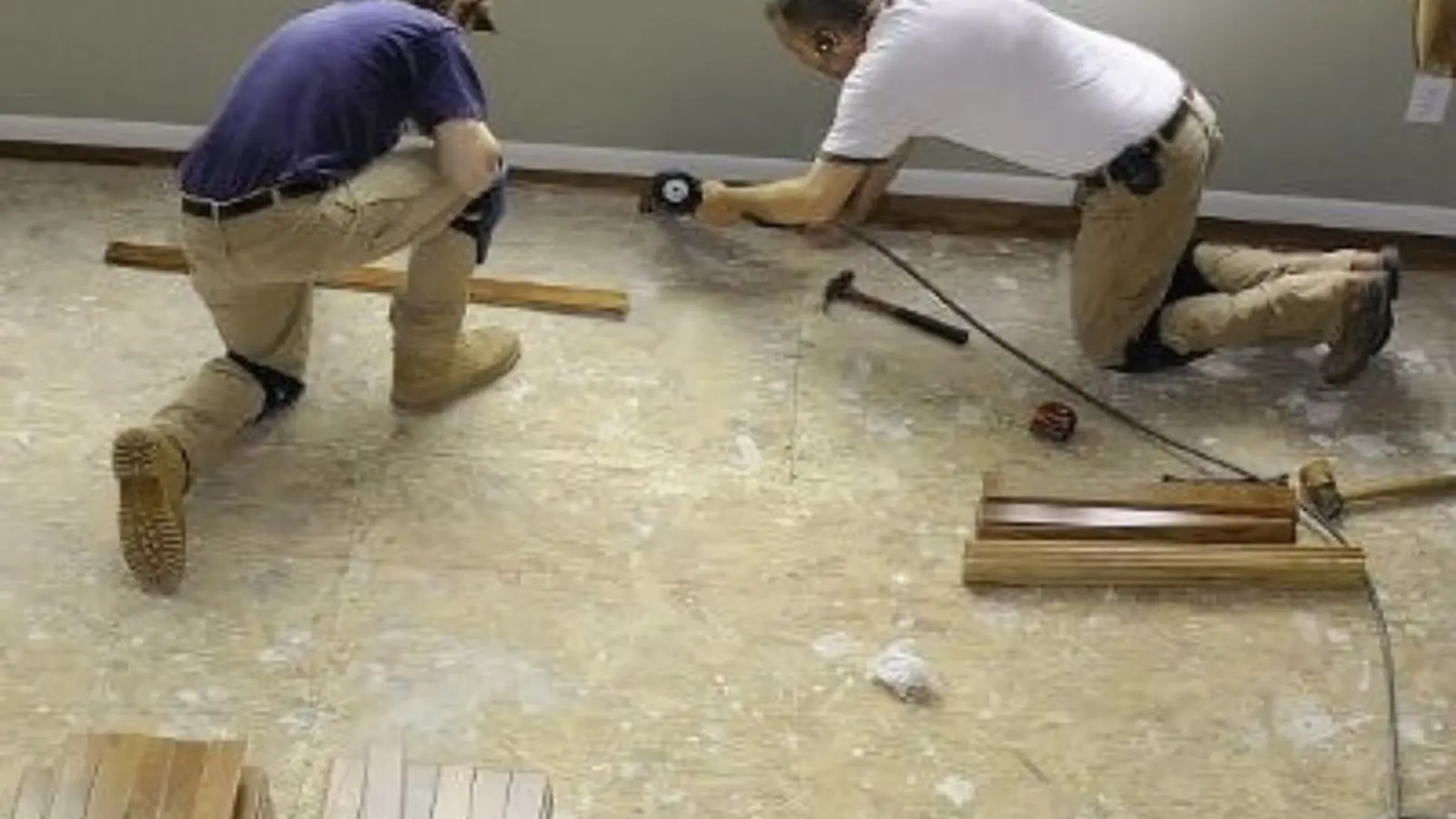
Water damage repair in Newbury Park, CA is the rebuilding stage that follows a leak, a flood or a burst pipe. Once the water is out and the structure is dry, the ruined drywall, insulation, flooring, trim and paint get replaced. A good repair puts the room back to its pre-loss condition without sealing hidden moisture inside the wall.
Repair is the last stage of the job. If the walls are still wet, start with water mitigation so the repair does not trap moisture. If standing water is still on the floor, call the line first and read the emergency water removal page while you wait.
What to do first if a wall or ceiling looks wrong
Keep people clear of any sagging or bulging surface. Do not cut into a wet wall yourself, since wiring or a pressurized line may sit behind it. Photograph the area and call before you patch or paint over a stain.
Signs the damage has reached the repair stage
Soft or crumbling drywall
Board that gives under a thumb has lost its gypsum strength. It cannot be dried back to sound, so it comes out.
Bubbling or peeling paint
Paint lifts when moisture moves through the wall from behind. The paint is a symptom, and the wall behind it needs a reading.
Swollen baseboards and trim
Wood trim absorbs water at the floor line and swells. Swelling that stays after drying means the piece needs replacing.
Cupped or buckled flooring
Boards that curl at the edges or lift off the subfloor signal moisture below the surface. The cause must be found before boards are replaced.
Ceiling and wall water damage repair
Ceiling stains in Newbury Park homes most often trace back to a roof leak after a winter storm, an upstairs toilet or tub supply line, or an attic condensate line from the air handler. Each source leaves the same brown ring, so the first job is finding where the water came from and confirming it is stopped.
Once the ceiling reads dry, the damaged section of drywall is cut back to the nearest framing. Wet insulation above it is removed, the cavity is checked again with a moisture meter, and new board goes in. Joints are taped and floated, the texture is matched to the surrounding ceiling, and a stain-blocking primer goes on before paint so the old ring does not bleed through.
Walls follow the same order: stop the water, dry the cavity, replace what is soft, then finish. A sagging ceiling or a bulging wall is a safety issue, so keep people clear and ask for help before touching it.
Stain spreading on a ceiling or wall?
Describe what you see and where the water may be coming from. The line is open 24/7.
Hardwood floor cupping after a leak
Hardwood cups when the underside of each board takes on more moisture than the top. Common causes are a washing machine supply valve that fails, a dishwasher or refrigerator line that drips for days, and a condensate line that backs up under a cabinet.
Light cupping sometimes flattens once the subfloor reads dry, and the floor can then be sanded and refinished. Boards that have crowned, split or lifted are replaced. Readings from a moisture meter, taken from the boards and the subfloor, decide which path applies. Guessing from the surface leads to a second repair.
How the repair is assessed
Every repair starts with readings. A moisture meter checks drywall, framing and flooring, and a thermal imaging camera shows cooler wet zones behind paint. The results are compared with a dry reference reading from an unaffected part of the house.
Work follows the published ANSI/IICRC S500 standard for water damage restoration as the industry reference. Ask any company whether its crews work to it. Closing a wall before it reads dry is how hidden mold starts, which is why drying and repair are kept in order.
| Repair option | Best when | Trade-off |
|---|---|---|
| Patch a small section | A small area of drywall is stained or soft and the rest reads dry | Fastest and least disruptive, but the texture and paint must be matched to the old ceiling |
| Replace a full panel or wall section | Water spread along a joint or wicked up a wall | More material and paint, but the finished surface is uniform |
| Replace flooring in a room | Boards or planks have crowned, split or lifted | Cleaner than spot repairs, with a visible change if the floor continues into the next room |
| Replace insulation and board together | Insulation above a ceiling stayed wet | Needed for a dry cavity, and it adds to the scope |
What changes the scope and the price
No two repairs cost the same, and exact figures depend on the room. The main factors are the water category (clean, gray or black water under S500), the square footage affected, the materials involved, how many days of drying were needed, and how much rebuild is left. Cabinets, built-ins and specialty flooring add more scope than plain drywall.
Insurance is a common question. In general terms, sudden and accidental water damage is often covered, while gradual leaks and neglect often are not, and flood damage is usually excluded and needs separate flood coverage. Check your policy or ask your insurer. Photos, a written scope and a drying log help whatever the outcome. Want your real number? Call (805) 291-8940.
Repairing homes in Newbury Park
Newbury Park mixes ages. Ventu Park began as a 1940s development and Casa Conejo was the first planned community here, while Dos Vientos Ranch and Rancho Conejo Village are the newer residential areas. Older homes can hide older plumbing and wall materials, so ask for readings behind the wall rather than judging by the paint.
Most of Newbury Park sits inside the City of Thousand Oaks, whose permit list includes replacing water heaters and plumbing fixtures and repairing gas, water or sewer lines. The city does not say whether drywall repair after water damage needs a permit, so permit rules vary by scope. Ask the city building division at (805) 449-2320 before work begins. For homes outside the city limits, ask Ventura County.
When mold is part of the repair
If the wall or ceiling has stayed wet for days, mold may be growing behind the finish. Mold is handled before the rebuild, in containment, and the details are on the mold remediation page. Wet debris, ruined carpet and contaminated materials fall under water damage cleanup. Nearby, we also serve Thousand Oaks on the same corridor.
Frequently asked questions
How long does water damage repair take?
It depends on the scope. A small ceiling patch can move quickly once the area reads dry. A room with flooring, baseboards and cabinets takes longer because materials must be ordered and finishes need time to cure.
Can you match my existing ceiling texture?
Texture matching is part of the finish stage. The surrounding texture is sampled and reproduced as closely as the material allows, and paint is blended across the whole ceiling plane.
Do I have to dry the area before repair starts?
Yes. Repairing over wet framing or board can trap moisture and start mold. Moisture readings confirm the structure is dry before new material goes in.
Will my hardwood floor need to be replaced?
Not always. Light cupping can settle after the subfloor dries, and sanding may restore the surface. Boards that crowned, split or lifted usually need replacing. Readings decide, not looks alone.
Is scope and price explained before the work starts?
Yes. You get the scope and the price explained before work begins, so there is no surprise later. Call (805) 291-8940 and describe the damage.