
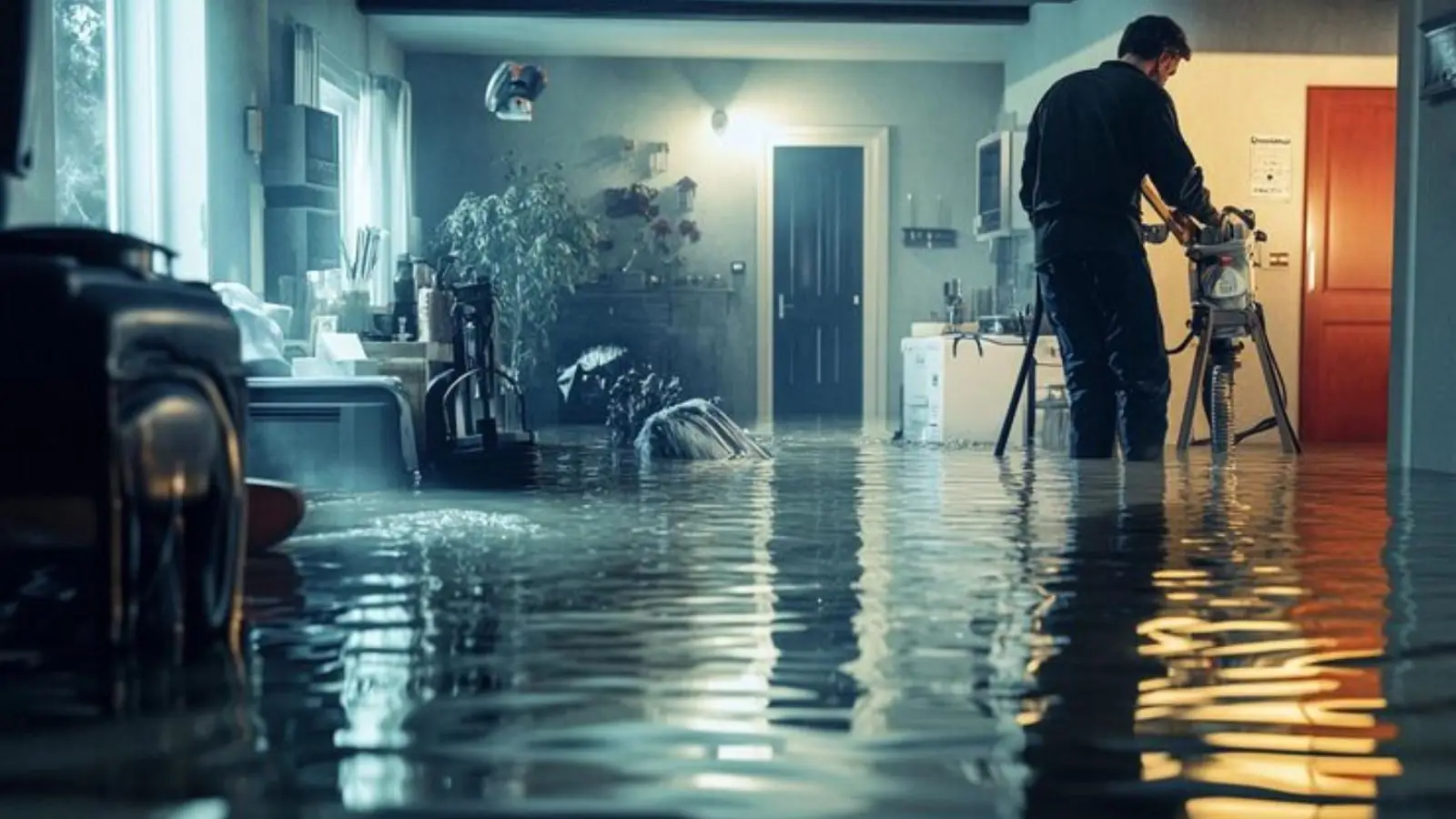
Water mitigation in Newbury Park, CA is the emergency step that limits how far water spreads and how much has to be torn out. If water is soaking your home now, call the 24/7 line, shut off the source, lift valuables and keep power off in wet areas only if the panel is dry to reach. Mitigation follows within the same day when available, and it matters most in the first 24 to 72 hours.
Is your wall damp, your carpet wet or your house musty?
Most people do not search for mitigation. They search for a wet wall, a soaked carpet, a musty smell or a stain that keeps growing. Those symptoms mean water is still in the building materials. Mitigation is the trade name for finding that water and drying it before it ruins drywall, floors and framing.
A smell is a late sign. If you notice it, water has likely been present for days. Call early, even if the surface looks dry, because wet insulation and cavities stay hidden.
When water damage is an emergency
Treat it as urgent when the water is still flowing, when more than one room is wet, when carpet has been soaked for more than a day, or when ceilings and walls are wet. Sewage and flood water are treated differently, and the flood damage restoration page explains why.
Safety first
If water has reached outlets, a panel or a gas appliance, stay out. Cut power only if the panel can be reached completely dry, and call your utility or 911 for any electrical or gas risk before you call the restoration line.
How mitigation works
Moisture mapping
A moisture meter checks floors, walls and ceilings, and a thermal imaging camera shows wet zones behind paint. The results are marked on a map of the house.
Extraction
Standing water is pulled out first. Wet carpet pad that cannot be saved is removed so it stops feeding moisture to the room.
Drying setup
Air movers push air across wet surfaces and LGR dehumidifiers pull moisture out of the air. The wet zone is contained so equipment dries only what needs drying.
Daily monitoring
Readings are taken each day and logged. Equipment is adjusted or removed only when the materials reach their dry goal.
Need drying started today?
Call the 24/7 line and describe what is wet.
Structural drying
Structural drying is the core of mitigation. It dries framing, subfloors, drywall and cabinets without tearing everything out. The published ANSI/IICRC S500 standard for water damage restoration is the industry reference for the process, and you can ask any company whether its crews work to it.
Drying usually takes several days, not hours. Time depends on the materials, how wet they got, and the air in the house. Drying is finished when readings match a dry reference, not when the surface feels dry to the hand.
Different materials give up water at different speeds. Drywall and carpet release moisture quickly, while hardwood, framing and plaster hold it much longer. That is why a room can feel dry on day two and still read wet inside a stud bay. Daily readings catch that gap, and the crew adjusts equipment placement as the readings change.
Some materials are removed instead of dried. Wet insulation, saturated carpet pad and board that has softened rarely recover, and leaving them in place slows the whole job. Taking them out early is usually faster and lowers the risk of mold, which is covered under mold remediation.
| Equipment | What it does | Why it matters |
|---|---|---|
| Moisture meter | Reads moisture in drywall, wood and subfloor | Shows where water is hiding and when drying is done |
| Thermal imaging camera | Shows temperature differences behind surfaces | Finds wet zones without opening walls |
| Air mover | Moves air across wet surfaces | Speeds evaporation from walls and floors |
| LGR dehumidifier | Removes moisture from the air | Keeps humidity low so water leaves the materials |
| Extraction unit | Pulls standing and absorbed water | Starts the job before drying equipment begins |
Renting equipment is not the same as a monitored job
Some callers ask about renting air movers and dehumidifiers. A rental gives you equipment, but not moisture mapping, daily readings or a decision about what has to come out. If you rent, ask who checks the readings and who decides when drying is finished.
What affects the cost
Mitigation scope depends on the water category, the area affected, the materials involved, how many days of drying are needed and whether any rebuild follows. Scope and price are explained before work starts. In general terms, sudden and accidental water is often covered by a homeowner policy and gradual leaks often are not. Check your policy or ask your insurer. The drying log and photos help.
After drying, water damage repair rebuilds what could not be saved. If water sat for days, ask about mold remediation too.
Local notes for Newbury Park
The Thousand Oaks area has warm dry summers and cool rainy winters, with annual precipitation averaging about 17 inches in NOAA normals. That means roof and window leaks tend to appear in the rainy season, so check your roof and gutters before a storm. If your home sits near Arroyo Conejo, check the FEMA flood map for your address and read your policy before winter. We also serve Camarillo just down the Conejo Grade.
Frequently asked questions
Do you handle water mitigation emergencies at night or on weekends in Newbury Park?
Yes. The line is open 24/7, including nights, weekends and holidays. Same-day response is offered when available.
What is the difference between mitigation and repair?
Mitigation stops the damage by removing water and drying the structure. Repair rebuilds what could not be saved. They happen in that order, and mitigation comes first.
How long does structural drying take?
Several days is common. The exact time depends on the materials, the amount of water, the humidity in the house and how soon drying started.
Why not just open the windows and run fans?
That helps a little, but it does not reach water inside walls or under floors. Air movers, dehumidifiers and moisture readings are needed to dry hidden areas.
Can the wet zone stay in use during drying?
Usually the wet zone is contained and equipment runs in that area. The crew explains which rooms are safe to use and which should stay clear.