
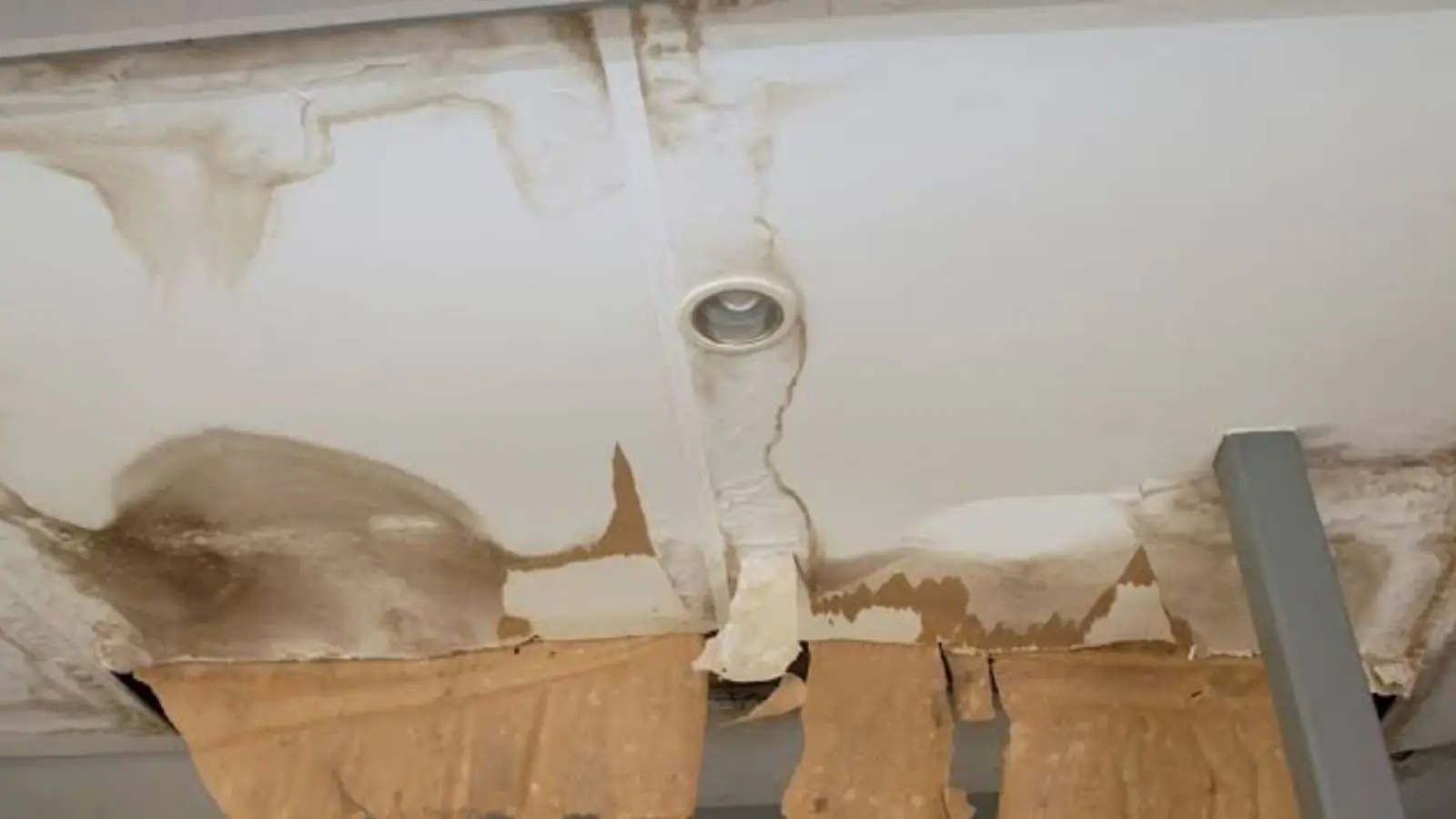
Most people notice a ceiling problem at an odd moment. A faint tea-colored patch over the hallway, a drip on the kitchen counter, or a bedroom ceiling sagging like a hammock. The stain matters less than where the water came from and whether it is still coming.
What to do first when a ceiling is wet
Keep people out from under a sagging or bulging ceiling, since saturated board can fall without warning. Do not poke it. If a light fixture or fan is wet, leave it off and call an electrician. Then call the restoration line and describe the stain.
What the stain is telling you
Water travels along framing and drywall before it shows itself, so the stain is often a few feet away from the actual leak. Still, its look carries clues. Edges, color and texture all change depending on how long the water has been there and how often it comes back.
| What you see | Likely source | What it suggests |
|---|---|---|
| Dark brown ring with a crisp edge | Repeated wetting from a roof leak or plumbing seep | The area has dried and gotten wet more than once |
| Pale yellow patch with a soft, blurry edge | A single recent leak | Water is fresh and the drywall may still be wet |
| Bulge or sag, sometimes with a drip | Water pooled behind the drywall | Drywall is holding weight and may let go |
| Small round spots in a line | Fastener or nail-head moisture along a joist | Condensation or a slow pipe sweat above |
| Stain that grows after a shower runs | Upstairs bathroom drain, tub or toilet supply | The leak is tied to use, not weather |
| Stain that appears only after rain | Roof, flashing or a vent boot | Water enters from outside the envelope |
A soft spot is the sign to take seriously. Press a gloved finger gently near the edge of the stain. If the surface feels spongy or the paint cracks and flakes, the paper face of the drywall has absorbed enough water to lose strength.
Four places the water usually comes from
Upstairs bathroom
A weeping toilet supply line, a failed tub overflow gasket or a worn shower pan sends water straight down. The stain tends to sit under the bathroom footprint and darkens after use.
Roof or flashing
Shingles lift, flashing pulls loose and vent boots crack in the sun. Water often runs along the underside of the roof deck and drops somewhere far from the entry point.
Attic air handler or condensate line
A furnace or air handler in the attic makes condensate while it cools. If the drain line clogs, the pan overflows onto the ceiling below, usually during warm weather.
Water heater in an attic or closet
A tank on an upper floor can seep at the fittings or fail at the tank itself. The stain may sit under a hallway closet and show up with no storm in sight.
The first minutes after you spot it
Catch the drip
Set a bucket or a wide pot under it and lay a towel inside to cut the splash. Move rugs and furniture out of the drip zone.
Stay clear of a bulge
A swollen ceiling holds a pocket of water that can release all at once. Keep people and pets out from under it, and do not poke it with a broom.
Shut off the supply
If an upstairs toilet, sink or washer is the suspect, close its shutoff valve. If you cannot tell, close the main water valve for the house.
Check the light fixture
If water is in or near a ceiling light, turn off that circuit at the panel, but only if you can reach the panel without stepping in water.
Photograph and call
Take wide and close photos with the date visible. Then call the restoration line so the drying plan starts while materials are still salvageable.
Electrical risk
If water is dripping from a fixture, a fan or a recessed light, or you smell burning, keep out of that room. Cut power only if the panel is dry and easy to reach. For sparking, buzzing or any gas smell, call 911 or your utility first, and call the restoration line after.
Ceiling already sagging or dripping?
Call now and describe what you see. Same-day response when available, 24 hours a day.
When a stain becomes an emergency
Treat it as urgent if the ceiling is bulging, water is still falling, insulation above is soaked, or the leak touches wiring. A dry, old, unchanging ring is a repair item. A wet, spreading one is a mitigation job.
Wet insulation presses down and holds moisture against framing for days. Crews use a moisture meter to map the wet area and a thermal imaging camera to find damp patches behind painted drywall that look dry to the eye.
How a wet ceiling gets dried and fixed
The sequence starts with finding and stopping the source. After that, a technician may cut small relief holes in a bulging ceiling to let trapped water out in a controlled way. Wet insulation comes out, and the cavity is opened enough to dry. Air movers push dry air through the space while an LGR dehumidifier pulls moisture out of the room.
Once readings return to normal, the repair phase begins. That means new drywall where needed, texture matching, primer and paint. Our water damage repair work covers that rebuild, and the drying stage ahead of it falls under water mitigation. If the leak left standing water or soaked flooring below, water damage cleanup handles the extraction and sanitizing.
If a stain stayed damp for more than a couple of days, ask the crew to check the back side of the drywall for mold. Growth needs moisture, so the water source and the drying come first. Any testing follows ANSI/IICRC S520 practice.
Neighboring towns, same ceilings
Homes in Moorpark and Camarillo share these ceiling problems, from attic air handlers to upstairs bathrooms.
Newbury Park water and weather notes
The Thousand Oaks area averages 17.35 inches of precipitation a year, with warm dry summers and cool rainy winters. That pattern matters for ceilings because a roof can sit dry for months and then show its weak spot during the first real storm. If a new stain appears in the rainy months, mark its edge with a pencil and note the date, then look at it again after the next dry day.
A leaking water heater is a common ceiling culprit when the tank sits upstairs or in a closet. The City of Thousand Oaks lists replacement of water heaters and plumbing fixtures among the work that needs a permit, and inspections are scheduled through the TO/24 portal. Before a plumber swaps the tank, call the Building contact at (805) 449-2320 to confirm what applies to your address.
Water you catch in buckets is not always clean, especially if it ran through attic insulation. The city ordinance bars dumping anything other than clean water into storm drains, so pour it down a household drain or a toilet instead of the street.
Sources: Wikipedia citing NOAA normals, City of Thousand Oaks website
Frequently asked questions
Is a brown ceiling stain always from an active leak?
No. A brown ring with a hard edge can be old and dry. Check it with a moisture meter, or watch it for a few days to see whether the edge moves.
Should I poke a hole in a bulging ceiling?
Only if the area below is clear. A small controlled hole at the lowest point of the bulge lets water drain into a bucket. If you are unsure, stay back and call for help.
Can I just paint over a stain once it dries?
Painting hides the color but not damp framing or insulation above. Stains bleed back through ordinary paint. Dry the cavity, confirm normal readings, then use a stain-blocking primer.
Will my homeowners policy cover a ceiling leak?
Sudden and accidental water damage is often covered, while gradual leaks and neglect often are not. Check your policy or ask your insurer, since wording varies.
Photos, video, a written scope of work and receipts all help support a claim.
Does a rainy week in Newbury Park mean my stain is a roof leak?
Not automatically. A rainy week can also raise attic humidity and make a clogged condensate line or a sweating duct show up at the same time as a storm.
Watch whether the stain grows during dry days. If it does, the source is likely plumbing or an air handler, not the roof.