
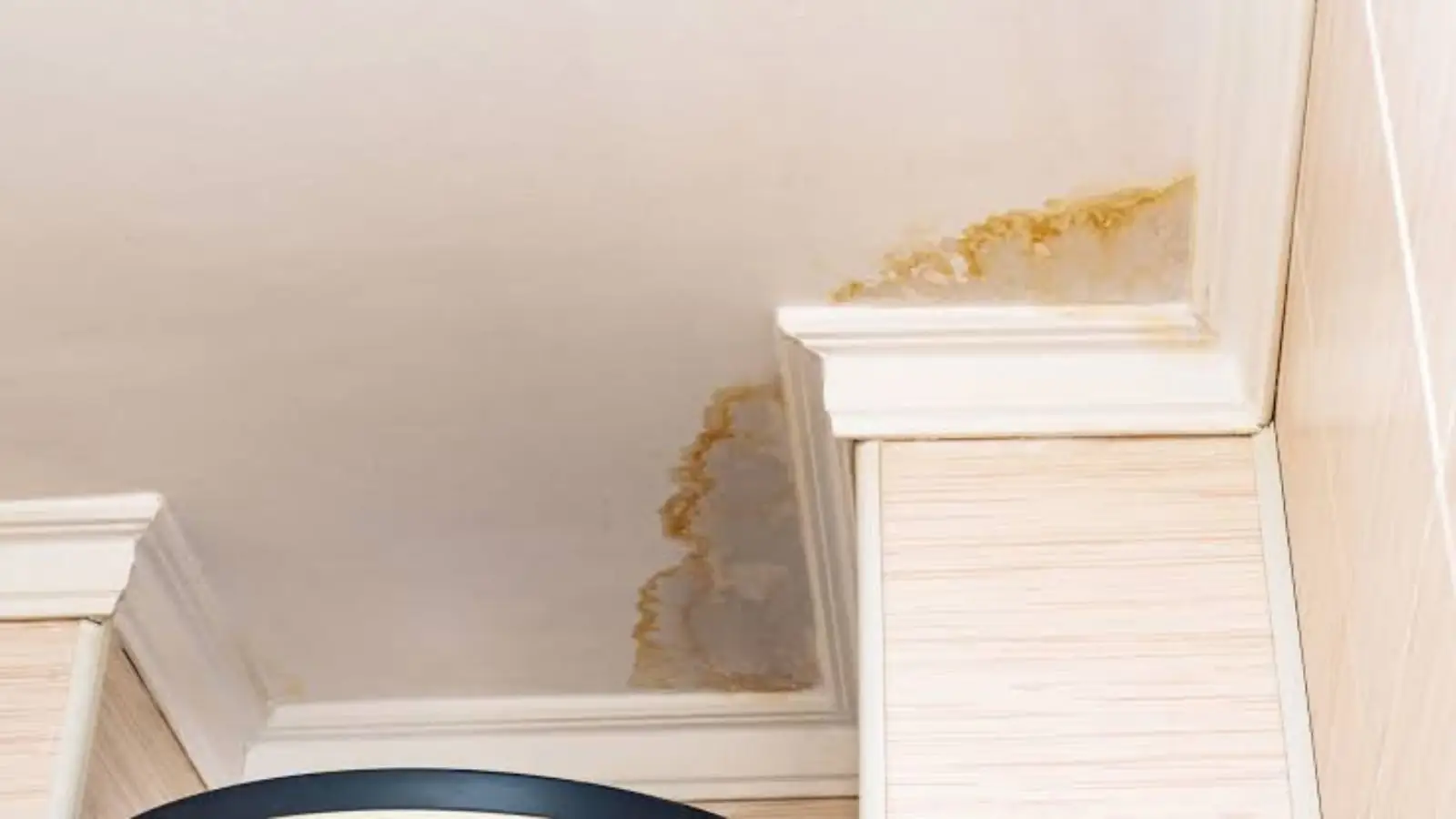
Read the moisture before you touch the paint
The published ANSI/IICRC S500 standard is the industry reference for deciding when a wet ceiling cavity counts as dry. Ask any company whether its crews work to it before anyone closes up a ceiling.
A stain is only the top layer of a stack. Under the paint sit drywall, then insulation, then framing, and any of them can still be wet. If you cover damp drywall with primer, the coat usually blisters or the ring bleeds back through within a few weeks.
Ask for readings across the stain and a few feet past its edge. A moisture meter checks the drywall itself, and a thermal imaging camera shows cooler wet zones the eye cannot see. If readings stay high after several dry days, the source is probably still active, and the job belongs with water mitigation before any rebuild starts.
Three leaks that end up on the same ceiling
Roof leak after rain
Water runs along a rafter and drops through the ceiling several feet from the roof opening. Attic insulation soaks it up like a sponge, so the wet area above is usually bigger than the stain below.
Upstairs toilet supply line
A weeping connector soaks the subfloor first, then the ceiling underneath. The stain tends to sit right below the bathroom and grows slowly over days or weeks.
Attic HVAC condensate line
When the drain line clogs, the pan overflows onto the drywall near the air handler. Hallway and closet ceilings are common spots, and the water often carries slimy buildup from the pan.
Patch, replace a section, or take the whole panel
| What you see | Usual fix | Why |
|---|---|---|
| Faint ring, drywall firm and dry on the meter | Seal with stain-blocking primer, repaint | Nothing structural is damaged, so the stain is the only problem |
| Small soft spot or one blistered area | Cut out and patch with new drywall | Softened gypsum will not hold tape or mud |
| Stain across several feet, paper face peeling | Replace the affected section back to the nearest joists | A patch would sit on drywall of unknown strength |
| Sag, bulge or water beading on the surface | Take the full panel down | Trapped water adds weight and can drop without warning |
| Readings still high near the cut line | Pause the rebuild and dry first | Closing a wet cavity invites repeat staining |
Wet ceiling and not sure what is behind it?
Call for moisture readings before you cut or paint.
How the cut-out and rebuild actually go
Open the cavity
The crew cuts past the visible damage to a solid edge, ideally landing on a joist so new drywall has something to screw into. Wet insulation comes out in bags.
Dry and verify
Air movers run until the framing and neighboring drywall read dry. Skipping this is the usual reason repairs stain again.
Hang new drywall
A matching thickness board goes in, screwed to framing, with tape across every seam.
Mud, sand and prime
Joint compound goes on in thin coats with sanding between. A stain-blocking primer seals any shadow left in surrounding paper.
Match the texture
Knockdown, orange peel or popcorn is sprayed or hand-applied to blend with the room, then the whole ceiling plane is painted so the patch does not show.
Cut-out size follows the damage, not a rule of thumb. Wet drywall wicks sideways, so crews usually go a hand's width beyond the last soft or discolored spot. Insulation above gets replaced when it was soaked, because compressed wet batts lose their value and stay damp for a long time.
When a sagging ceiling has to come down
A bulge means water is pooled in the drywall or on top of it. Gypsum board can hold a surprising amount of water and then let go all at once. Poking a small hole at the lowest point of the bulge with a screwdriver, with a bucket underneath, lets it drain in a controlled way.
Safety first
Stay out from under a bulging ceiling, and keep kids and pets out of the room. If water is near a light fixture, ceiling fan or recessed can, leave the switch alone and cut power at the breaker only if the panel is dry and reachable. Call the utility or 911 for any electrical risk before calling the restoration line.
Once the water is out, the panel or section comes down because wet gypsum rarely dries back to full strength. The rebuild phase is handled under water damage repair, and the water removal piece before it falls under emergency water removal if the leak is active.
Primer and texture decide whether the repair disappears
Ordinary wall paint does not stop tannin, rust or water stains. A shellac or oil-based stain-blocking primer does, and it goes on after the compound is sanded and before the finish coat. Two thin coats beat one heavy one.
Texture is where most amateur patches give themselves away. Test the spray pattern on cardboard first, and feather it past the repair so it fades into the existing ceiling. Painting only the patch almost always shows a halo, so plan to paint wall to wall.
Who to call, and in what order
- Active drip: stop the source at the shut-off valve or roof tarp, then call.
- Stain with soft drywall: ask for moisture readings and a written scope before cutting.
- Repair after drying: get the cut-out size, insulation plan, primer and texture listed in writing.
- Insurance in play: photograph the ceiling, the attic and any ruptured line before anything moves, and ask your insurer how it treats sudden versus gradual leaks.
For homes in Thousand Oaks and Westlake Village, the same sequence applies, though Westlake Village sits in Los Angeles County so permit contacts differ. Call (805) 291-8940 for same-day response when available.
Newbury Park water and weather notes
The Thousand Oaks area averages about 17.35 inches of rain a year, with warm dry summers and cool rainy winters. That means a roof can sit untested for months and then show every weak flashing in the first storm of the season. Check ceilings and the attic after the first real rain, not after the stain appears.
Part of the Newbury Park permit picture is on the city's published list, which includes replacing plumbing fixtures such as toilets and sinks and repairing water lines. It does not say whether drywall repair after water damage needs a permit, so permit rules vary by scope. Ask the city building department before repair work, and if a permit is needed, inspections go through the TO/24 online portal.
Sources: City of Thousand Oaks website, Wikipedia citing NOAA normals
Frequently asked questions
Can I just paint over a ceiling water stain?
Only if the drywall reads dry on a moisture meter and feels firm. Plain paint will not hide the stain, so use a stain-blocking primer first and then repaint the whole ceiling.
If the board is soft, cracked or peeling, painting hides a problem that will keep growing.
How big does the drywall cut-out need to be?
It follows the damage. Crews cut past the last soft or discolored area to a solid edge, usually landing on a joist so the new board can be screwed down.
Wet drywall wicks sideways, so the cut is often larger than the visible stain.
Does wet attic insulation have to be replaced?
Often yes. Soaked batts compress, hold moisture against the drywall and take a long time to dry.
Lightly damp insulation that dries quickly in place may stay. A moisture reading settles the question.
Why does the stain come back after the first rain?
Usually the roof opening or the pipe was never fixed, or the cavity above was closed while still wet. Either one keeps feeding the same spot.
After the first storm of the season, look at the attic side of the ceiling before judging the repair.
What should I check about water bills if a ceiling leak came from a supply line?
Water in the Conejo Valley comes from four purveyors, so the office to call depends on your provider. Read your bill or use the city's Find Your Water Provider map on toaks.gov/waterproviders to confirm.
If a hidden leak ran for days, ask your provider about their process for unusual usage, and keep photos and the plumber's invoice.