
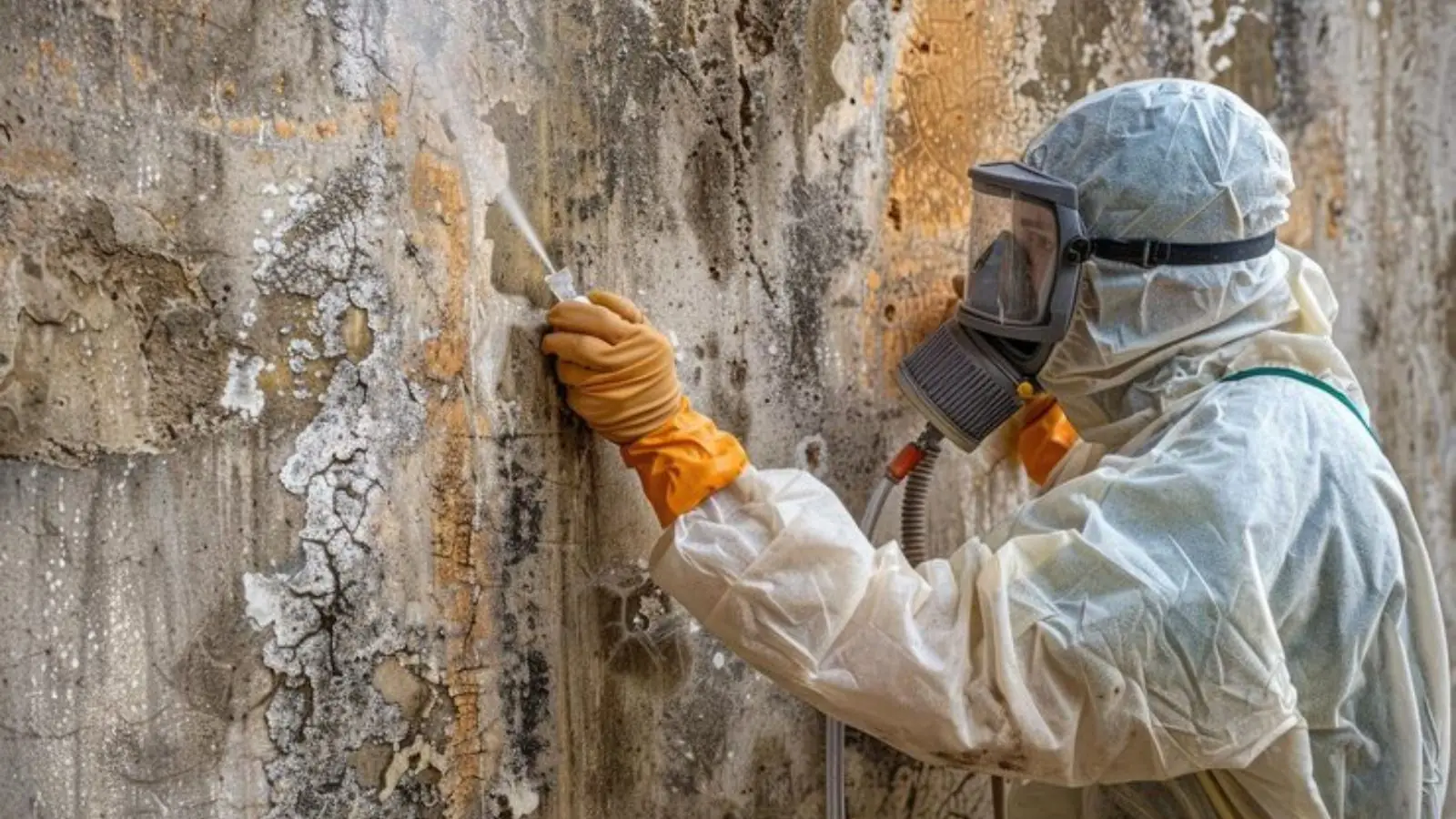
Mold removal is not a single act. It is a sorting job. Each surface and layer gets one of three outcomes: clean it, dry it and monitor it, or cut it out. The rule of thumb is that hard, non-porous or solid surfaces tend to be cleaned and soft, absorbent ones tend to go.
None of that changes the first rule. Mold needs moisture, so the water source gets fixed before anything else. Cleaning a wall that is still getting wet only schedules a repeat visit.
Material by material
| Material | Usually cleaned or removed | Why |
|---|---|---|
| Drywall with paper facing | Removed when growth or long-term wetting is present | Paper and gypsum are porous and absorb moisture |
| Fiberglass insulation | Removed | Cannot be cleaned and stays damp |
| Carpet pad | Removed | Foam and felt hold water and cannot be sanitized in place |
| Carpet | Case by case | Depends on contamination and how long it stayed wet |
| Wood trim and baseboards | Cleaned if sound, removed if swollen or stained through | Solid wood can often be cleaned, particleboard cannot |
| Wood framing | Cleaned and dried | Structural lumber is dense and can be HEPA vacuumed and cleaned |
| Tile, glass, metal, sealed concrete | Cleaned | Hard surfaces can be wiped and treated |
The table is a pattern and not a rule for your house. A crew reads the moisture meter, probes the material and looks behind it before it decides. Ask for those decisions to be written into the scope.
Drywall, insulation and the stuff inside the wall
Drywall is where most replacement happens. When paper-faced board has been wet long enough to grow, the cut usually extends beyond the visible patch, often to a clean, dry edge on a stud line. That gives the rebuild a straight seam and gives the crew a view of the cavity.
Insulation inside the cavity is almost always removed with the drywall. Framing behind it is then cleaned with HEPA vacuums and wire brushes or other abrasive methods, and dried with air movers and LGR dehumidifiers until readings meet the target.
Found growth and want a written scope?
Call (805) 291-8940 and describe the material and the room. Same-day response when available.
How containment protects the rest of the house
Disturbing mold sends spores and dust into the air. Containment keeps that dust in the work area. The crew hangs poly sheeting, seals doorways and vents with tape, and sets up negative air so air flows into the work zone and out through HEPA filtration.
Poly barriers
Sheeting with a zippered entry isolates the room, hallway or crawl space opening from the rest of the home.
Negative air
A HEPA air scrubber exhausts filtered air outdoors, so pressure inside the work zone stays lower than outside it.
Sealed disposal
Removed drywall, insulation and pad go into heavy bags that are closed before they leave the work area.
Cleaning and verification
Surfaces are HEPA vacuumed and wiped, then checked for visible growth and for moisture before barriers come down.
These methods follow the practice described in ANSI/IICRC S520. Ask any company whether its crews work to that standard and how they handle disposal. You can also read how the sequence fits together on the mold remediation page.
The sale-and-loan case
If you are selling, a buyer's lender or an escrow officer sometimes asks for independent clearance testing before closing. This is done by a third party who is separate from the remediation company. The details depend on the contract and the lender.
We cannot promise that a lender, buyer or escrow officer will accept any report. What helps is a clean paper trail: the written scope, the moisture log, photos before and after, disposal records, receipts and the clearance report if one is ordered. Hand all of it to your agent early.
Rebuild and permits
After removal comes the rebuild. Drywall is hung, taped and textured, flooring is reinstalled, trim is replaced and walls are primed and painted. Some projects can be handled by a general contractor, and some fit into water damage repair scheduled right after drying.
Permits are a separate question. They depend on what you are rebuilding, and a scope that includes plumbing, gas lines, electrical or structural framing may be treated differently from cosmetic patching. Ask before work starts so you are not told to open a finished wall.
Do not seal it up early
If the plan includes plumbing or roof repair, finish and inspect that work before closing the wall. Closing drywall over a damp cavity restarts the problem. Hold off on painting until the moisture readings are in the range your crew specified.
Homeowners in Oak Park and Thousand Oaks ask the same questions about material, containment and paperwork, and the same written scope answers them.
Newbury Park permits and city contacts
Most of Newbury Park sits inside the City of Thousand Oaks, which runs its permits through an online portal called TO/24. Inspections can only be scheduled through TO/24, and the Building contact is (805) 449-2320. Call before you open walls so you know whether your rebuild needs a permit.
The city's permit list includes repair or replacement of gas, water and sewer lines, and replacement of water heaters and plumbing fixtures. It does not say whether drywall repair after water damage needs a permit. Permit rules vary by scope, so ask the city building department before repair work.
Casa Conejo and Ventu Park are unincorporated parts of Newbury Park, so the answer for those addresses may not come from the city. Confirm which agency covers your property before you schedule the rebuild.
Sources: City of Thousand Oaks website, Wikipedia community history
Frequently asked questions
Can moldy drywall be cleaned instead of replaced?
Sometimes surface growth on firm, dry drywall is cleaned and verified. If the board is soft, stained through or was wet for a long time, removal is the usual path. The moisture readings decide.
What happens to the debris?
Removed material is bagged in the work area in sealed heavy bags, carried out through a controlled path and disposed of according to local rules. It should not be dragged through the house uncovered.
Do I need independent testing?
Not for every job. It becomes relevant when a lender, buyer or escrow officer asks for it, or when you want third-party verification. Ask your agent or lender what they expect.
Is there a promise that growth will not recur?
No. Moisture is the controlling factor. If the source is fixed, the structure is dry and conditions stay dry, the odds improve. If water returns, growth can too.
Who do I call about permits for a rebuild in Newbury Park?
If your address is inside the City of Thousand Oaks, call the Building contact at (805) 449-2320 or use the TO/24 portal, where inspections must be scheduled. Permit rules vary by scope.
If you live in Casa Conejo or Ventu Park, confirm which agency covers your lot before you ask.