
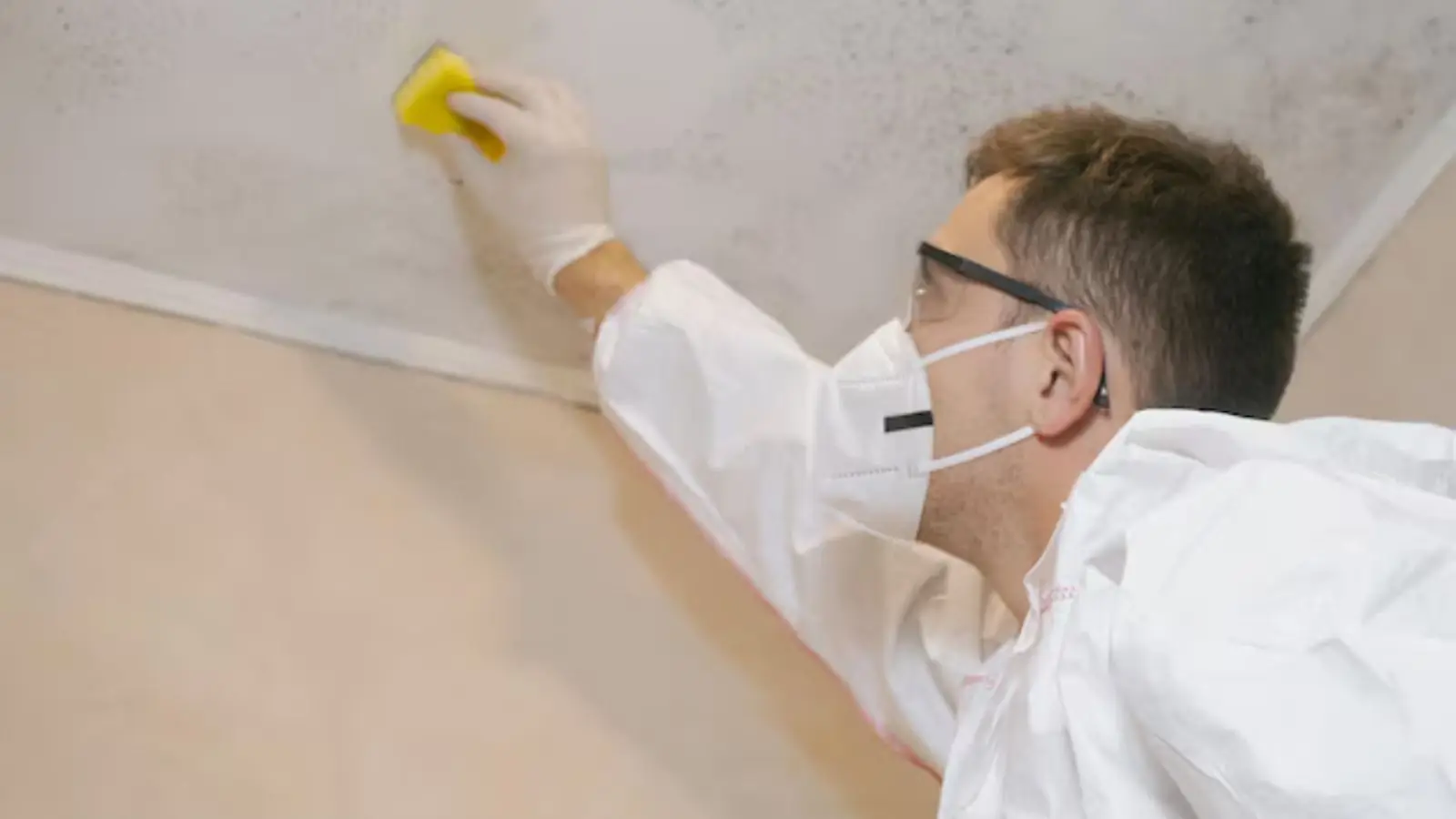
Searching for whether ceiling mold is dangerous is natural, and it is a fair worry. We cannot diagnose anything or make claims about how it affects people. If anyone in the home has a medical concern, talk to a physician and tell them what you found.
What a restoration crew can answer is the practical side. Why is it there, how far does it go, and what has to happen so it stops growing? The answers start with water, because mold on a ceiling is almost always a moisture story.
Where ceiling growth comes from
Shower corner and exhaust fan
Steam rises and settles on the coolest surface, usually the ceiling above the shower. A fan that is weak, undersized or vented into the attic instead of outdoors leaves that moisture behind.
Roof leak
A cracked flashing, a lifted shingle or a failed skylight curb lets rain reach the drywall from above. The stain often shows a few feet away from the actual entry point.
Attic condensation
Warm indoor air that leaks into a cold attic meets the underside of the roof deck and turns to droplets. Insulation that is compressed or missing makes it worse.
A leak from upstairs
A toilet supply line, a tub overflow or a washing machine hose above the ceiling can soak the drywall below. Even after the pipe is fixed, the paper facing may stay wet.
A past leak that was only painted over
An old stain that was sealed and repainted can hold trapped moisture and darken again after the next humid spell.
A pattern helps. Growth in a ring around the stain points to water from above. Growth in a bathroom corner points to vapor. A ceiling that feels damp or soft to a gentle press points to a leak that is still active.
Why painting over it does not work
Stain-blocking paint and mildew-resistant paint sit on the surface. The growth is feeding on the paper facing of the drywall and on the dust that settles on it, and the moisture source is above or behind that layer. Paint hides the spot for a while, then the stain returns through the finish.
Painting can also muddy the picture for anyone who inspects the ceiling later. A clean, dated photo record from the day you found it is more useful than a fresh coat.
Ceiling stain spreading or wet?
Call (805) 291-8940. A crew can check moisture before the drywall has to come down.
What to do first
- Find out whether it is wet right now. Press gently with a gloved hand, and note any drip, bulge or sag.
- Stop the likely source. Turn off a bathroom fixture upstairs, run the exhaust fan, or tarp a roof area if it is safe to do so.
- Photograph the ceiling from several angles with a tape measure for scale.
- Do not scrub, spray bleach or sand the area. That spreads dust and does not address the water.
- Keep the fan and air conditioner off in that room if growth is large, so air does not push dust around.
- Call for an assessment, and tell your insurer if a sudden leak caused the damage.
Water near fixtures or wiring
If the ceiling is dripping near a light fixture, a ceiling fan or an outlet, stay out of the room. Cut power only if the breaker panel can be reached on dry floor. Call the utility or 911 for any electrical risk before calling the restoration line.
When the ceiling material has to come out
Small surface growth on a dry, sound ceiling sometimes cleans up with HEPA vacuuming and a cleaning pass. Drywall that has been wet for a long time, feels soft, has crumbled paper or shows staining on both sides is usually removed. The decision follows the moisture readings, not the look of the paint.
| What you find | Usual approach | Why |
|---|---|---|
| Light spots on dry, firm drywall | HEPA vacuum and clean, then verify | Material is still sound and the source is fixed |
| Stain ring with a soft or sagging area | Cut out and replace | Water has weakened the board |
| Growth through the paint on a bathroom ceiling | Fix ventilation, then clean or replace | Ventilation is the cause |
| Wet insulation above the stain | Remove and replace | Insulation stays damp and keeps feeding the problem |
| Repeated staining after earlier paint | Open up and inspect | A hidden leak is likely |
When a section comes out, the crew sets containment first, with poly sheeting and negative air machines running HEPA filters. Debris goes into sealed bags. More detail on the process is on the mold remediation page.
What a written scope should cover
Ask for the scope before work starts. It should name the rooms, the ceiling area involved, the moisture readings, the containment method, the materials to be removed and the drying equipment planned. It should also say who handles the rebuild.
- Source of moisture and who is fixing it (roofer, plumber or ventilation work)
- Square footage of drywall to be removed and the insulation affected
- Cleaning method and whether antimicrobial treatment is planned
- Verification steps and whether independent testing is expected
- Rebuild: texture, paint and trim matching
Mold work follows ANSI/IICRC S520 practice, and you can ask any company whether its crews work to it. Ask whether your state licenses mold work, too. Patching, texturing and repainting after removal fall under water damage repair.
Related questions from nearby towns
Ceiling growth looks the same from one community to the next. Homeowners in Moorpark, where average annual rain is about 17.4 inches and falls mostly in winter, ask the same questions. So do homeowners in Oak Park, where many homes date from the late 1960s onward. The first question is about the stain, and the second is about the cost of the ceiling repair.
Newbury Park weather and water notes
The Thousand Oaks area has a Mediterranean climate with warm, dry summers and cool, rainy winters, averaging 17.35 inches of rain a year. That means a roof gets one concentrated wet season. Check flashing and shingles before the first big storm, and look at ceilings after each rain.
If your water use rises for no clear reason, a hidden leak is one possible cause, so check with your provider. City water bills can be reached at (805) 449-2201, and the city offers a Find Your Water Provider map on toaks.gov/waterproviders if you are not sure who sends your bill.
Mold work that involves removing drywall is usually repair work, and permit rules vary by scope. Ask the city building department before repair work, especially if plumbing or roof framing is part of the fix.
Sources: NOAA normals as cited by Wikipedia, City of Thousand Oaks website
Frequently asked questions
Is mold on a ceiling dangerous?
We cannot make health claims or diagnose anything. Questions about how it may affect someone belong to a physician.
What we can say is that mold needs moisture, so the useful step is finding and fixing the water source.
Can I wipe it off with bleach?
Wiping or spraying tends to spread spores and dust and does not reach the moisture in the drywall. It also does nothing about the leak. Photograph the area and get a moisture reading instead.
Do I need testing?
Not always. A visual and moisture assessment often tells you enough to write a scope. Independent testing comes up when a lender, buyer or insurer asks for it, or when you want a record of the results afterward.
How long does ceiling repair take?
Drying and removal can take a few days, and the rebuild adds time for patching, texture and paint. The schedule depends on the source of the water and how much material is affected, so ask for the timeline in your written scope.
Does Newbury Park's mostly dry climate make ceiling mold unlikely?
No. Dry summers do not stop a shower, a leaking roof in winter or a pipe above the ceiling from putting moisture where it should not be. The Thousand Oaks area averages 17.35 inches of rain a year, mostly in the cool season.
Check ceilings after the first heavy storm each winter and run bathroom fans every time someone showers.