
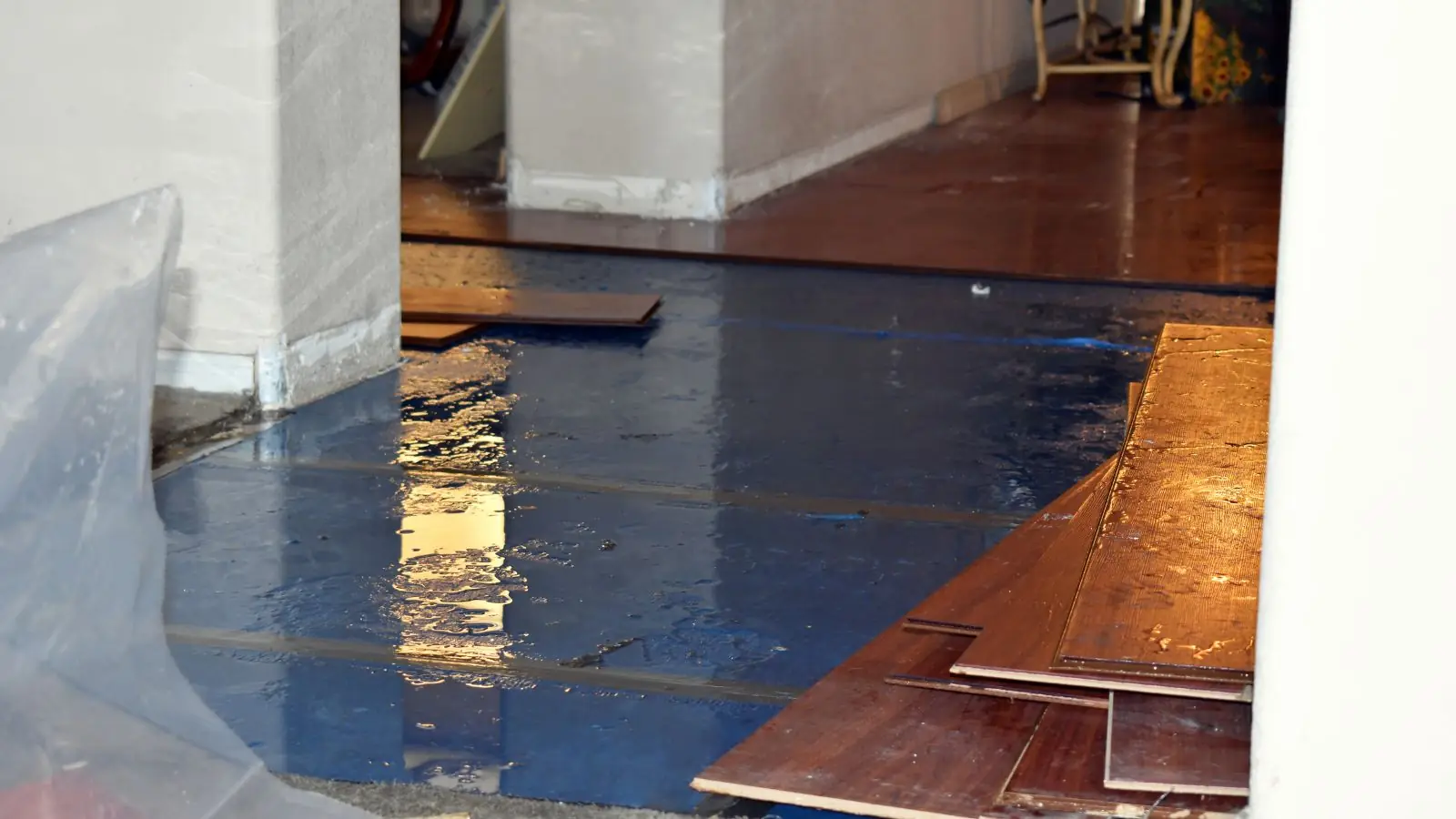
Wood is a sponge with a grain. It takes on water through its underside and edges, swells, and then tries to dry back to a balance with the room. If it gets there slowly and evenly, a lot of floors recover. If water sat for days or came from below, the floor usually shows it in the shape of its boards.
What to do first when floors start to cup
Find and stop the moisture source. Do not use heaters to rush the drying. Do not sand or refinish a floor until a moisture meter says it is dry. Pull rugs and furniture off wet boards so they do not stain.
The published ANSI/IICRC S500 standard for water damage restoration is the industry reference for drying wet floors, and you can ask any company whether its crews work to it.
Reading the board shapes
Cupping
Board edges rise higher than the center, making a shallow trough. It usually means moisture is coming from below or the underside is wetter than the top.
Crowning
The center of the board is higher than the edges. It often shows after a cupped floor was sanded before it finished drying.
Buckling
Boards lift off the subfloor, sometimes in a tent shape. It signals heavy or prolonged wetting and pulls fasteners loose.
Staining and blackening
Gray, black or dark rings along seams point to water that sat long enough to discolor the wood or finish. Surface sanding may not reach it.
Gapping
Wide gaps between boards appear as wood dries below its normal moisture content. They can follow a flood, or a dry spell after cupping.
Cupping is the most common first sign, and it is also the most misread. A floor can cup from a leak you never saw, which is why the source hunt matters as much as the floor itself.
Where the water really comes from
Few floors are damaged by a dramatic flood. Most suffer from a slow failure that went unnoticed for weeks. These are the usual culprits.
- Washer supply valve failure, where a braided hose or valve seeps behind the machine.
- An HVAC condensate line that clogs and overflows into a closet or a wall cavity near a floor.
- Slab moisture, where water rises through a concrete slab under glued or floated wood.
- A dishwasher leak at the door gasket, drain hose or supply fitting, running under the kitchen run of boards.
- A refrigerator ice-maker line, a sink drain or a toilet supply line.
Slab moisture is the hardest to see. The surface looks dry, but the board is held tight against a slab that is releasing vapor, and the floor cups across a whole room. A moisture meter on the boards and a separate reading on the slab tell the two stories apart.
Boards lifting or standing water on the floor?
Call now. Same-day response when available, day or night.
Drying in place or pulling boards
There are two ways to dry a wet wood floor. One leaves the floor down, and the other removes part of it to expose what is under it. The choice depends on how long the floor was wet and how thick the structure is.
Mat systems
A drying mat system lays low-profile mats over the floor and pulls air through them with a vacuum-style unit, drawing moisture out of the boards and the subfloor. It can save a floor that is only mildly cupped, and it limits demolition. It works best on solid wood fastened over a plywood subfloor.
Pulling boards
If boards are buckled, glued down over a slab, or sitting on trapped water, a crew may remove a row or two along a wall to open the cavity. Air movers and an LGR dehumidifier then dry the subfloor from the side. Engineered wood and floating floors are less forgiving, since their layers can separate.
Our water mitigation crews take readings every visit, because a floor that looks flat can still be wet inside. Drying is done when the wood and the subfloor both reach their dry goal, not when the cupping flattens.
Fix or replace: a decision table
| What you see | Likely outcome | Why |
|---|---|---|
| Mild cupping, single leak, caught early | Dry in place, then sand and refinish | Wood can flatten as moisture equalizes |
| Cupping across a whole room from slab moisture | Fix the moisture first, then reassess | Refinishing too soon locks in a bad shape |
| Buckling or boards lifted from subfloor | Replace affected boards | Fasteners and glue bond have failed |
| Black staining through the finish | Replace stained boards | Discoloration runs deeper than sanding reaches |
| Engineered or floating floor, edges swollen | Replace the floor | Layers separate once wetted |
| Dry, flat, but strong musty smell | Open and inspect before deciding | Moisture may be trapped beneath |
When sand and refinish works, and when it does not
Sanding works once boards have flattened and readings are normal. Waiting matters. Sanding a floor that is still cupped removes high edges and leaves the center crowned when the wood finally dries. A refinisher who asks for moisture readings first is protecting your investment.
Replacement is cleaner when damage is localized but deep, when stain runs through the board, or when the floor is too thin to sand again. New boards can be woven into the old, and a full-room refinish blends the color. Our water damage repair work covers this rebuild stage.
Check the area under the floor too. If the leak came from a slab or a long seep, the subfloor, underlayment and baseboards may need attention. Ask for a written scope that lists the boards, the subfloor and the finish, so nothing is left out.
Wood floors in nearby towns
The same board shapes show up in Camarillo and Westlake Village, where the same washer valves and condensate lines cause the same leaks. A quick meter reading is the shared first step.
If water has covered a large area of floor, emergency water removal comes first, since pumps pull the bulk water off before mats or fans can do their job.
Newbury Park water and weather notes
Newbury Park includes older neighborhoods such as Casa Conejo, the first planned community in town, and Ventu Park, which began as a 1940s development of about 500 acres. It also includes newer areas such as Dos Vientos Ranch and Rancho Conejo Village. Older tracts may have original plumbing and supply lines, so if you have wood floors there, check washer hoses and under-sink fittings regularly.
A slow leak under a floor often shows first in the water bill. City water bill questions go to (805) 449-2201, and other water questions go to (805) 449-2100. Four water purveyors serve the Conejo Valley, so read your bill or use the city's Find Your Water Provider map. A bill that jumps with no change in habits is a reason to pull a meter reading on the floors.
The Thousand Oaks area gets warm dry summers and cool rainy winters, averaging 17.35 inches of precipitation. Floors near doors and slider tracks can get wet when winter storms push water past thresholds, so wipe up tracked-in water and check weatherstripping before the rains.
Sources: Wikipedia, City of Thousand Oaks website
Frequently asked questions
Will my cupped floor flatten on its own?
Sometimes, if the source is fixed and the wood dries slowly. Check moisture readings first, since flattening can take weeks and some floors do not recover.
Do not sand until the readings are stable and normal.
Can a wet hardwood floor be saved?
Often, if it is dried quickly and the water was clean. Longer exposure, buckling and black staining lower the odds. A meter reading at the boards and the subfloor guides the decision.
Why do boards sometimes cup after the water is gone?
Because the top dries faster than the underside. As moisture equalizes, the bottom of the board shrinks and the edges curl upward. That is why drying has to reach the subfloor and not just the surface.
Does insurance pay for a damaged wood floor?
Sudden and accidental water damage is often covered, while gradual leaks and neglect often are not. Check your policy or ask your insurer. Photos, video and a written scope support the claim.
My water bill jumped and my floors are cupping. Who should I call first?
Close the main valve and check the meter. If it still moves with everything off, the leak is on your side, so call a plumber and the restoration line. If you are unsure who supplies your water, read your bill or use the city's provider map.
Call the water utility for questions about the bill itself.