
The short definition
What to do if you find growth today
Stop work in that area, close the door and leave the HVAC alone. Take photos and note the moisture source if you can see one. Call before you remove any material, since removal without containment can spread the problem into clean rooms.
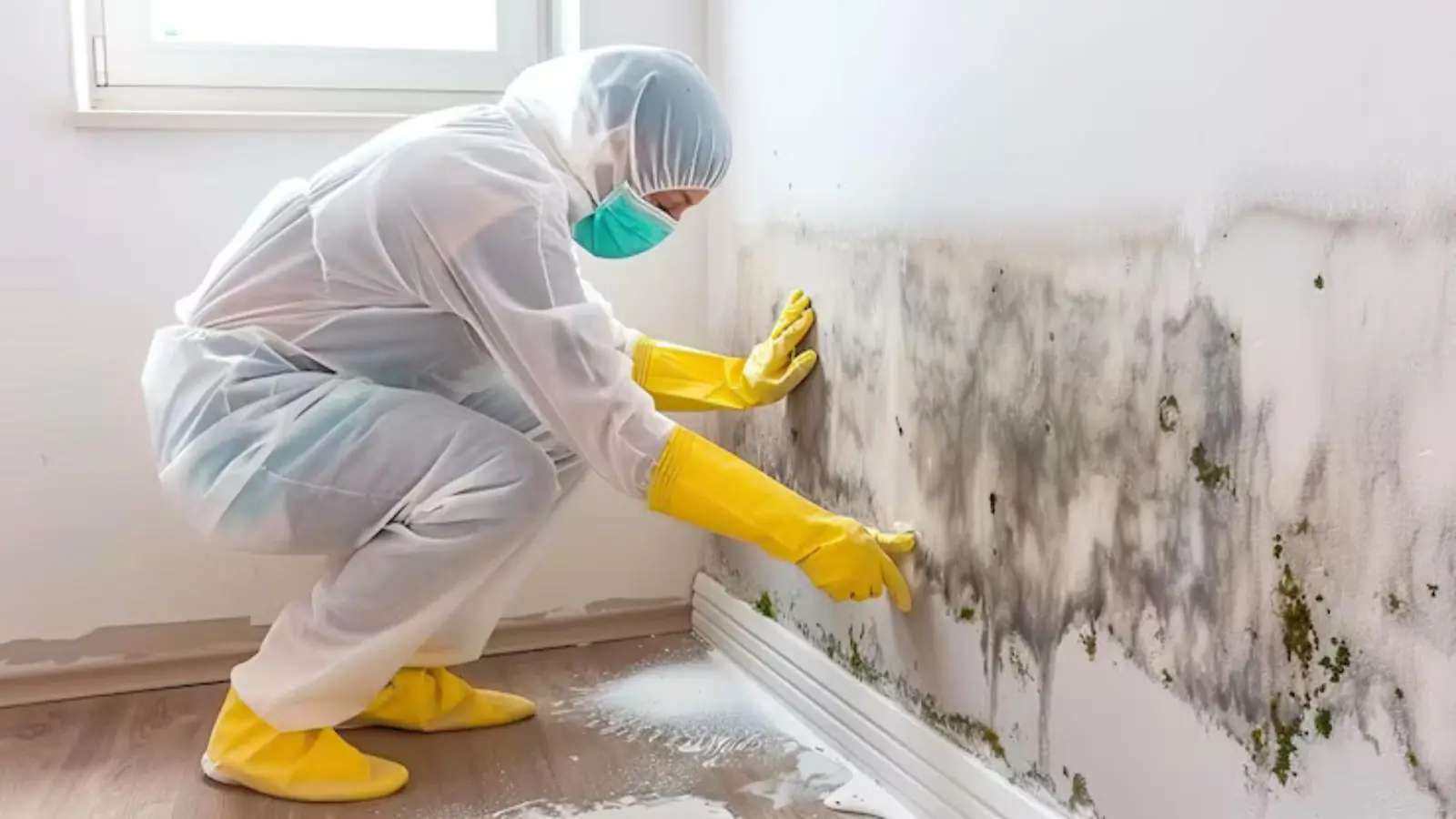
Mold remediation is the controlled process of finding the moisture that allowed growth, containing the affected area, removing contaminated materials, cleaning what remains and drying the structure so conditions no longer support growth. The key word is controlled. Scrubbing a stain with a sponge is cleaning, while remediation is a planned job with barriers, filtered air and a written scope.
The published reference is ANSI/IICRC S520, the standard for professional mold remediation. Homeowners can ask any company whether its crews work to it. Health questions are outside the standard and belong with a physician.
Four words that get mixed up
Inspection
A person looks at the building, checks moisture with a meter and a thermal imaging camera, and notes where growth and wet materials are. It answers where and why.
Testing
Air or surface samples are taken and sent to a lab. Testing measures and identifies, it does not clean anything.
Remediation
The crew contains, removes, cleans and dries. This is the work itself.
Removal
Usually means taking out materials that cannot be cleaned, such as carpet or drywall. It is one part of remediation, not the whole job.
The water source comes first
Mold needs moisture. If the source is a roof leak, a failing washer valve, a condensate line or seepage through a wall, remediating without fixing it is a temporary cleaning. Wet materials need drying, and that usually begins under water mitigation before mold work starts.
Think of it as a sequence. The leak is fixed, then the wet zone is dried, then growth is cleaned and removed, then the structure is checked and rebuilt. Reverse that order and the growth tends to return to the same wall.
Found a spot on a closet wall or ceiling?
Call to have the moisture checked before anyone scrubs or paints over it.
Assessment, remediation, clearance and rebuild compared
| Stage | What happens | Who usually does it | Output |
|---|---|---|---|
| Assessment | Moisture mapping, visual inspection, scope drafted | Remediation company or independent assessor | Written scope and moisture readings |
| Remediation | Containment, negative air, removal, cleaning, drying | Remediation crew | Cleaned and dried structure |
| Clearance testing | Post-work visual check and sampling | Independent party, not the crew doing the work | Pass or fail report |
| Rebuild | New drywall, flooring, paint, trim | Repair crew or general contractor | Finished room |
Independent assessment and clearance are not required in every case, but they give a second set of eyes. A crew grading its own work has an obvious conflict, which is why some owners hire a separate tester. Ask whether your state licenses mold work, and whether one company may both remediate and test.
Why a buyer's lender sometimes asks for clearance
During a home sale, a buyer's lender or inspector may ask for documentation that a past problem was corrected. Clearance testing results, the written scope and the drying log are the usual paperwork. We make no promise about what any lender will accept, so ask the lender in advance what form they want.
What the job looks like on site
Set containment
Plastic sheeting seals the area and a zipper door controls entry. Negative air pulls air out of the zone so dust stays inside.
Filter the air
HEPA air scrubbers run throughout the work, cleaning the air in the contained space.
Remove what cannot be cleaned
Porous materials such as wet drywall, carpet pad and insulation are cut out and bagged.
Clean what stays
Framing is HEPA vacuumed and wiped, and antimicrobial treatment is applied where the scope calls for it.
Dry the structure
Air movers and LGR dehumidifiers bring materials back to their dry reference.
What a written scope should list
- The moisture source and who is fixing it.
- The area being contained, with a sketch or room names.
- Each material to be removed and the reason.
- The cleaning method, including HEPA vacuuming and what antimicrobial is used.
- The drying goal and how readings will be shared.
- Whether clearance testing is included, and who performs it.
- What the crew will not rebuild, so you can plan a second trade.
Scope and price should be explained before work starts. If the quote is a single line without materials, containment or a moisture source listed, ask for more detail. The finish work afterward falls under water damage repair, and it often belongs on a separate line.
Where the neighbors fit in
The same terms and steps apply across the valley. Owners in Westlake Village or Moorpark should confirm local permit contacts, since Westlake Village sits in Los Angeles County. Call (805) 291-8940 and ask about same-day response when available.
Safety first
If the affected area also has standing water near outlets or an electrical panel, stay out. Cut power only if the panel is dry and reachable, and call the utility or 911 for any electrical risk before calling the restoration line.
Newbury Park water and weather notes
Most of Newbury Park sits inside the City of Thousand Oaks, but Casa Conejo and Ventu Park are unincorporated. That matters because the agency that answers permit questions depends on the address. Ask your city or county building department which one covers you before any rebuild begins.
For addresses inside city limits, Thousand Oaks inspections are scheduled through its TO/24 portal, and the Building contact is (805) 449-2320. The city's permit list covers items like water heaters, plumbing fixtures and repair of water or sewer lines. It does not say that mold cleanup or drywall repair needs a permit, so permit rules vary by scope and a call to the city is the sure answer.
Winters here are cool and rainy, with the Thousand Oaks area averaging 17.35 inches of rain a year. That means a roof or window leak can sit unseen behind a wall for weeks before a spot appears. After a wet month, check closets on exterior walls, the attic and window corners.
Sources: Wikipedia, City of Thousand Oaks website, Wikipedia citing NOAA normals
Frequently asked questions
Is mold remediation the same as mold removal?
No. Removal is a part of remediation. Remediation includes the source fix, containment, removal, cleaning and drying.
A company that only wipes surfaces is not offering remediation.
Do I need testing before remediation?
Not always. Many jobs start from a visual and moisture assessment because visible growth and wet materials already define the scope.
Testing is useful when growth is suspected but not visible, or when a buyer, lender or landlord asks for it.
What does clearance testing check?
It checks that the work area is visually clean, that moisture readings are at dry levels and sometimes that air or surface samples fall within the tester's criteria.
An independent party usually does it so the crew that cleaned is not grading itself.
Can mold remediation be covered by insurance?
Sudden and accidental water damage is often covered and gradual leaks and neglect often are not. Mold tied to a covered loss is a conversation to have with your insurer.
Check your policy, keep photos and ask what documents they need.
Does cleaning remove all traces of mold?
The goal is to bring the area back to normal background conditions and remove growth, not to reach zero. Nobody can promise mold will never return, because it depends on moisture.
Fixing the water source and keeping humidity down is the real protection.
I live in Casa Conejo or Ventu Park. Who do I ask about permits for the rebuild?
Those areas of Newbury Park are unincorporated, so the answer may be county, not city. Ask your city or county building department before repair work.
Inside Thousand Oaks limits, start with the Building contact at (805) 449-2320.